

How To Set Up A Novel
If y'all misunderstand how to write a novel with the proper story construction, your book will never sell.
Harsh, but true. And that's why we're here to tell you the exact methods that skyrocketed the popularity of books similar The Hunger Games and the Divergent series.
Thankfully, we've deconstructed some of the globe's virtually compelling stories, and then taught countless people how to write a novel that pulls readers in using the 5 Milestone Method—that we'll teach you lot here.
If y'all're ready to larn what it takes to write a great novel, stick effectually! We're breaking down the 12 steps you Need along with the most common questions nosotros get.
Here are the steps for how to write a novel:
- Create the story idea & premise
- Develop characters
- Create your globe
- Choose a indicate of view
- Outline your novel
- Write the first page
- Write The Setup
- Create The Inciting Incident
- Add the Outset Slap of a novel
- Add The Second Slap
- End it with the Climax
- Common questions most writing a novel
Simply before we swoop right into those, we have to understand your unique writing method in order for y'all to understand novel writing in a mode that's all-time for you.
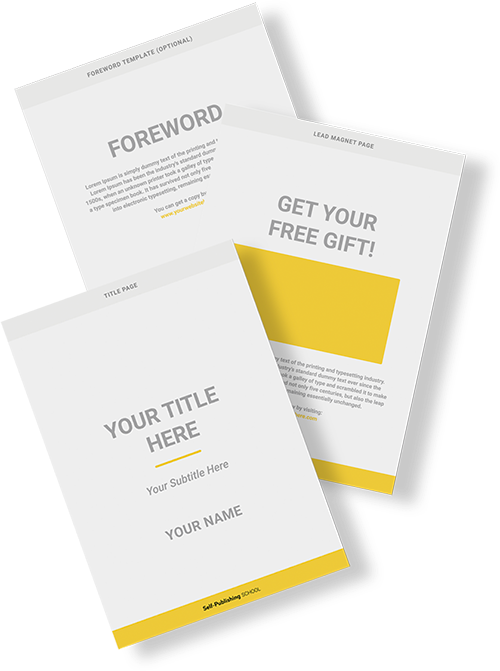
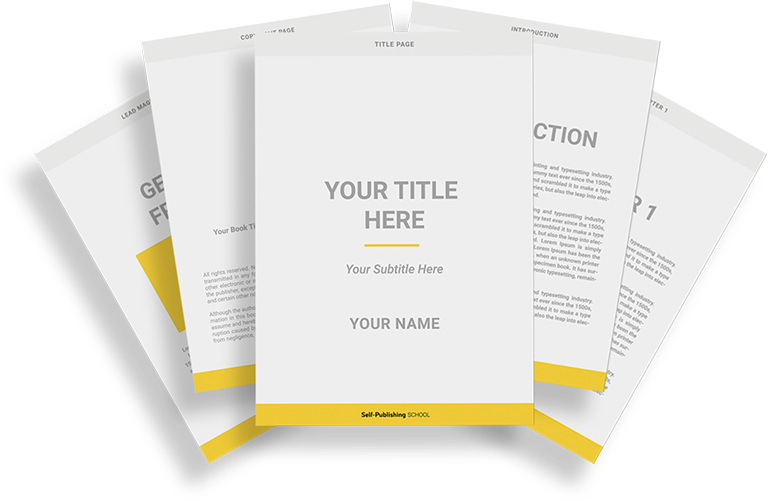
Complimentary TOOL
Volume Outline Template Generator
Cull your Fiction or Nonfiction book blazon beneath to get your gratuitous chapter past chapter outline!
Enter your details below and get your pre-formatted outline in your inbox and starting time writing today!
CONGRATULATIONS
Thanks for submitting! Check your email for your volume outline template.
In the concurrently, bank check out our Volume Outline Challenge.
How to Write a Novel in 11 Must-Do Steps [TEMPLATE]
Most novels and movies take five cardinal points that make up the cadre of their story – it's a formula that's been around for longer than books take.
This may not even be something authors practice intentionally simply rather, these are what brand a story (even spoken) good and captivating.
What'due south more, these milestones are something that readers have subconsciously been trained to expect for when digesting a piece of fiction—meaning, if your novel doesn't follow these, it will feel similar it'due south "missing something" and isn't satisfying.
In other words, if you don't have these five key moments, your reader is probable to turned off of your story considering it didn't come across expectations set by the hundreds (if non thousands) of stories they have already digested before yours.
Let'due south go started.
#1 – Craft your story idea & premise
This is really what volition kicking off your book. You probably already have an thought for writing a novel, and that's why you're hither! The tricky part is taking a single thought and turning it into a total story.
If you're like most fiction writers, the idea is very articulate and very vivid. Yous're but non certain what's needed to turn it into a story. For that, we always become to the premise.
The premise of a novel is the overarching concept that sets up intrigue.
For example, in Hunger Games, the premise is: what if a lodge forced people to fight to the expiry—even children.
That is a unmarried idea that holds a lot of promise for an intriguing story. It says, "there will be violence, heartache, and pain." And to readers, that is perfect.
Hither's a guide for turning your novel idea into a premise and story:
- Ask yourself "what if" and write down several alternate paths your story could accept
- Choose ane of those ideas that holds the almost promise for excitement, intrigue, and conflict
- Build a mindmap using this premise and branch out diverse possibilities
- Take your mindmap and begin building out the steps below
#2 – Develop characters
No novel can be without great characters. Even the crappiest of plots can be saved by incredible characters. Spend time on this stride of writing a novel!
Each master grapheme should have a backstory, description, personality traits, and a purpose (or arc) for your novel.
Remember: you may build your characters every bit you build your plot and globe. Each of these should compliment one some other in the sense that they are building on to each other. You may have a character trait that is actually, really inconvenient with the world. This volition create boosted conflict to add entertainment value to your story.
We accept all-encompassing blog posts to assistance with crafting characters we recommend reading for this section:
- Character evolution (with a contour you can download)
- Protagonist (building your main character)
- Anti-hero
- Graphic symbol archetypes
- Graphic symbol motivation
- Character arcs (how to write i)
#3 – Create your globe
Even if yous're writing a romance novel set in the mod earth, you however have to build your world. Oftentimes, the term "worldbuilding" tin be synonymous with building the "setting" of your novel.
These are some questions you lot should be asking before you write your novel:
- What is the weather/environment similar?
- What are the customs or cultural norms?
- What is 1 unique or interesting role of this world?
- What values exercise the people in this setting concur?
- What blazon of fiscal systems exist here?
- What types of things are considered "taboo" or wrong in this part of the world?
In that location are countless questions you can answer, and the type of novel y'all're writing will dictate which questions to answer before you start.
We have more blog posts catered to advanced questions that go in-depth of this process you can read here:
- Worldbuilding (overview and questions)
- Fantasy worldbuilding
- Worldbuilding process (steps to build information technology!)
#four – Cull your point of view
The point of view will totally depend on what you enjoy writing, the norm for your genre and target audience, and what voice fits best with the story you want to tell.
Many authors will have a certain betoken of view that is about comfortable for them, only yous besides have to proceed in mind what is standard practice in the industry for your type of novel.
For case: Romance novels are often written in starting time person present tense, because romance readers want to experience very shut to the main character (often a adult female) because those readers like to put themselves in the shoes of that character.
Notwithstanding, epic fantasy is often written in third person past-tense because readers may have a hard time placing themselves as the main character in a world that'southward so far from reality.
Obviously, at that place are exceptions to every dominion. The central with writing rules is to know them and their purpose and so yous tin can interruption them intentionally.
Hither are the different points of view you can write in:
- get-go person present-tense
- offset person past-tense
- second person present-tense
- second person past-tense
- tertiary person present-tense
- third person past-tense
- omnicient present-tense
- omnicient past-tense
If you lot tin't make up one's mind, find books that are similar to your idea and target audience (age-range) and choose which point of view is most mutual: this is likely the industry standard. But keep in mind, that if yous write better and more naturally in a different tense, go with that i.
#5 – Outline your novel
Your novel volition need direction. Even if you lot "tin can't write from an outline," you all the same take to know where your story is going if you want to craft it in a way that's exciting.
There are ii types of writers out at that place, and each will have a unique outlining method: plotters and pantsers.
A plotter is someone who plans out their novel with an outline before actually writing, whereas a pantser is someone who writes with seemingly no management – they write past the seat of their pants.
Are you a plotter or a
Pantsers
These are writers who basically only have a few vague elements about the story in mind when they start writing, but nothing else. They may have an ending or at least a climax in listen for where they're headed.
Ane of the most famous pantsers is Stephen King. In interviews, Stephen King has said that he often has an idea of the beginning, the premise, and a vague idea how it'south all going to end – and that's all he needs to commencement writing his offset draft.
Plotters
These are writers who demand to know every major piece of their novel before they first writing. They have full, complete outlines that serve every bit a guide for their writing.
They volition know who each and every one of their characters are, what their motivations are, the capacity needed for the book, affiliate sections, and in some cases, even paragraphs. Probably the most famous plotter out there is James Patterson.
Knowing if y'all're a plotter or pantser volition dictate your entire writing process.
Conspicuously, it's possible to be successful whether y'all're a plotter or pantser. Simply here'south the harsh reality: whereas Stephen King and James Patterson sit on opposite extremes of the 'Outline Spectrum', virtually of us fall somewhere in betwixt.
Either mode, you lot'll need some sort of structure for putting all the pieces of your novel together.
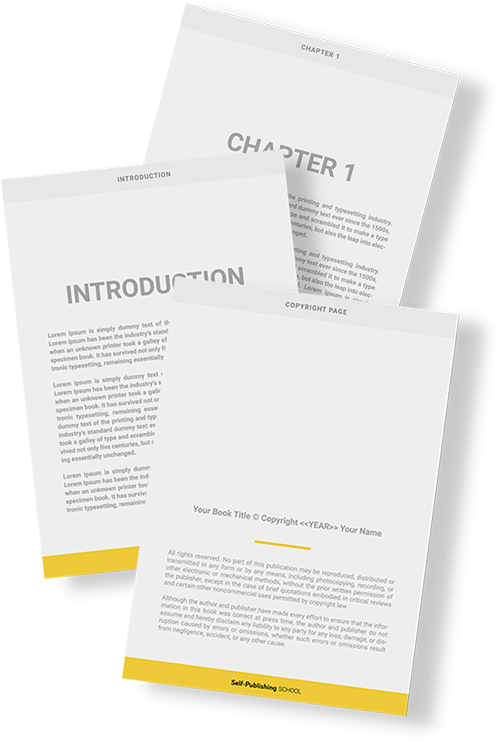
This is why we crated a fully performance novel template you tin apply—that includes structure, tips for writing each section, along with front and dorsum matter of the book for when you're finished. Just fill up out your info below and check your inbox!
How to Write a Novel: BOOK TEMPLATE
#6 – Write the first page
Nosotros'd love to say the first folio isn't all that important when writing a novel, but we all know that'due south non truthful. The first page is often what helps readers decide to buy or pass on a novel.
This is especially true when you publish on Amazon and accept the "look inside" feature.
The Amazon "wait inside" feature acts every bit the aforementioned thing as a person flipping open a book to the first page in a bookstore. That is your opportunity to snag readers.
However, many first-time novel writers get caught up in writing the kickoff sentence, which isn't as of import as the offset page in full. We've plant that past edifice the first page in a way that causes a reader to at to the lowest degree flip to the next page, you can snag them.
Why is this?
Considering when a reader feels the need to go on reading, they subconsciously meet our book as a "folio-turner" and will purchase information technology.
The best way to construct your novel'southward opening is by doing this:
- start "in media res" which menas "in the middle"—typically of action, a character's everday, or a tense state of affairs
- Evidence (non tell) something interesting nearly your globe that readers don't get details nigh until the side by side page
- Employ strong verbs and action to appeal to a reader'southward emotions (this activeness hooks them)
- Hint at something that makes the reader feel sympathetic (or like) the main character
Here'south an example of a book'south first folio that showcases these elements:
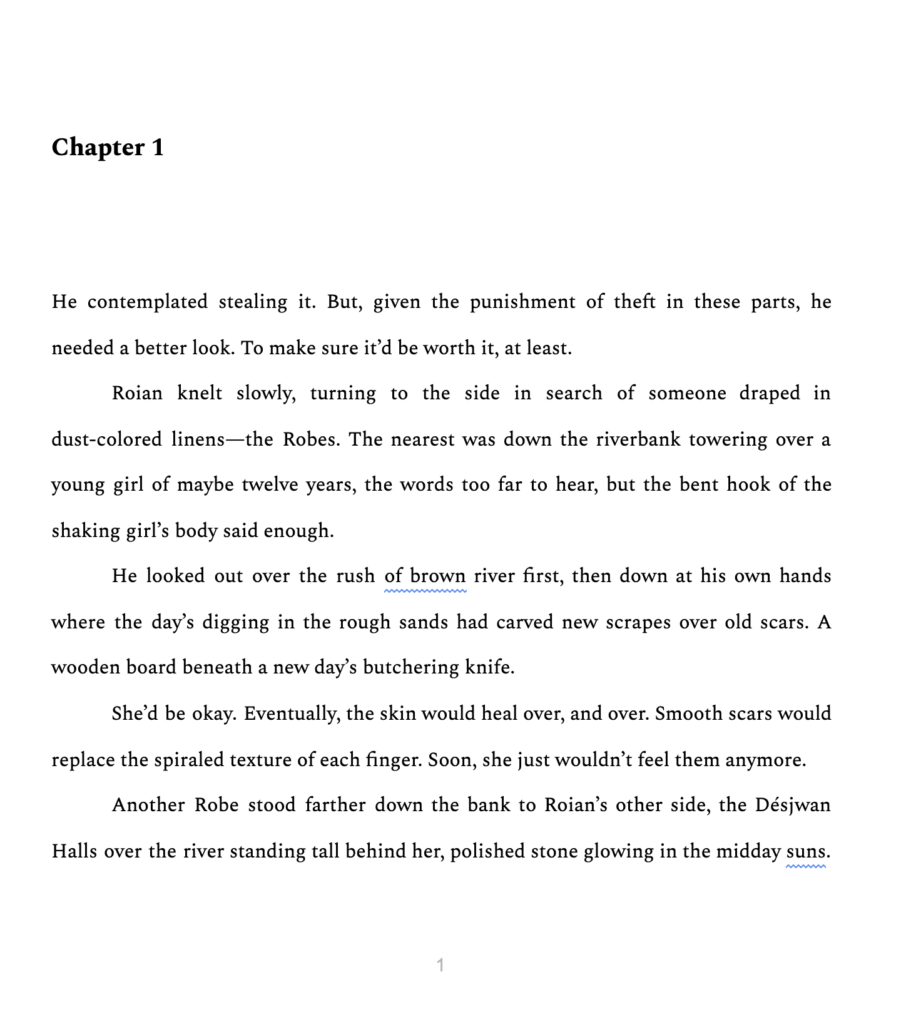
This outset page works well because:
- nosotros've established intrigue with the item Roian has plant
- we've established sympathy by showcasing injury—in ii ways
- we've started "in media res", the everyday life of the main character
- we're requiring the reader turn the page to actually learn more than about the item, the "Robes", and more
- nosotros've created intrigue for the earth by introducing 2 suns, which is out of the "ordinary"
#vii – The Setup when writing a novel
This is where you brand your story promise and write an introduction that pulls readers in.
Hither's a solid resource for how to start a story if yous need a few more tips.
Y'all tell your reader what kind of story information technology will be – a one-act, drama, mystery, fantasy, sci-fi – and you give a few clues every bit to what they tin can expect. Whatsoever you said in these initial pages must be followed to the end of your story.
A rock-cold drama cannot plow into a slapstick comedy by the end of the story. That doesn't mean a rock-common cold drama can't have humor in information technology, it just means that you tin can suddenly pivot and become an Adam Sandler motion picture.
Also, during the setup, we learn a little flake about:
- The characters
- Their everyday lives
- Their challenges
- The world they alive in
We get a sense of where the story is heading.
One mistake fabricated by first-fourth dimension fiction authors is that they do non properly set up the story expectations and the reader goes in expecting one matter, but to get another.
Zilch annoys readers more, and so it is essential that during the setup phase of your novel, y'all fix the expectations that you will see during the volume or you lot'll lose those 5-star Amazon reviews that make such a difference.
The Setup of a novel example
In the Hunger Games, we run across Katniss. From her environment, it is obvious that she is poor, and every bit soon every bit she steps exterior of her wooden shack we meet hovering drones.
Within the first few pages of this book, we have learned three essential things:
- This volume is a drama
- Katniss is our heroine and she has a miserable life
- SURPRISE! There are drones and other technologies that indicate this to be a sci-fi
- We are nearly to read a dystopia set up quondam in the hereafter
#eight – The Inciting Incident
The inciting incident is the moment in your story when your hero's life changes forever. It is the 'no-going back' moment, where cipher that happens afterwards will return your hero'southward earth back to normal.
Katniss volunteers, Neo takes the carmine pill, Dorothy lands in OZ … the aliens are here!
As shortly as your inciting incident happens, your story should exist full throttle towards the climax.
The most mutual error first-time authors make is that their inciting incident is reversible. That means that something could happen that would return the hero'due south life dorsum to normal.
No, no, no!
Your inciting incident should as final as the severing of a limb or a death of a loved one. Nothing should exist able to opposite the furnishings of your inciting incident has on your hero.
Inciting Incident in a Novel Case:
Katniss volunteers! In the Hunger Games, the inciting incident is irreversible because – quite literally – soldiers take hold of Katniss, whisk her away from her world, and into the world of the games.
At that place is no escape.
And fifty-fifty if she could go away, she would be hunted by the Capital for the rest of her life. With those two simple words, "I volunteer!" her life has inverse forever.
Notation: There is an exception to this rule when it comes to romances.
With romances, the inciting incident is most always when the two lovebirds run across. (Not always, but for the vast majority of romances, this is the instance.) With romances, endeavour to create an inciting incident that simultaneously shows how perfect these two people are for each other while setting upwards the numerous reasons why they tin't exist together.
#nine – The First Slap
Now, we are abroad to the races for writing a novel!
Over the adjacent few chapters, your grapheme should be making a serial of gains and losses, where the amass result is that their situation is slightly better than what it was at the moment of the inciting incident.
The reason why we need this up trajectory is because we are setting upward the reader for the first slap.
The kickoff slap is the moment when everything that our hero has gained is lost in fell swoop. Your hero is brought down to zero. In other words, all gains are lost, and your hero's situation has never been bleaker.
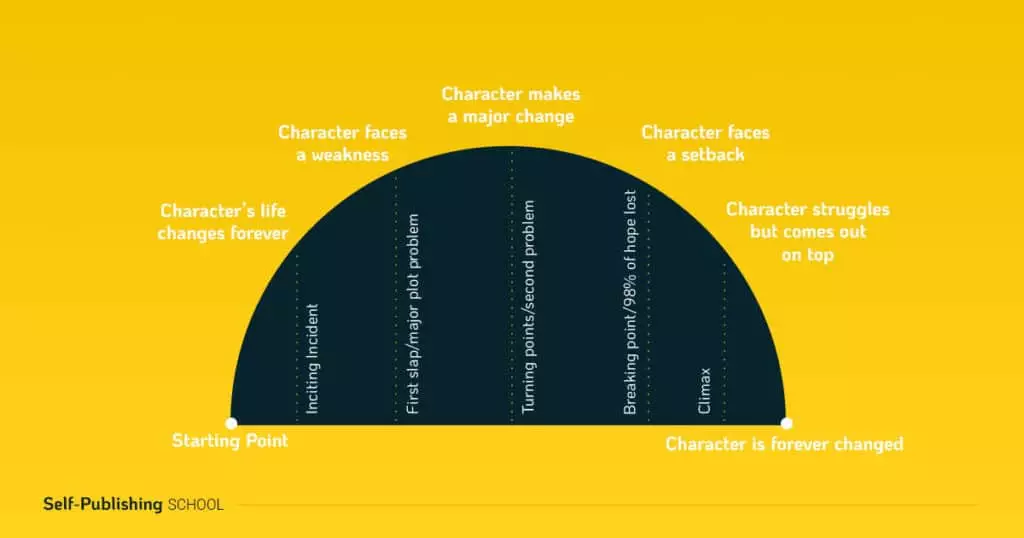
The greater the autumn, the more than engaged your reader will exist.
First Slap Example:
In the Hunger Games, Katniss'southward world is brought down to zilch when she actually enters the Games.
Between the inciting incident on the kickoff slap, Katniss has made several gains, garnering the attention of the Upper-case letter and making some friends along the way. But none of that matters the moment she enters the Games – and what a moment information technology is.
#10 -The Second Slap
Your hero has rose to the claiming! They have successfully thwarted the big evil that has been thrusted upon them by the first slap and she is doing well.
…Now it is fourth dimension to bring her back to 0 once again.
The second slap should be as harsh, if not harsher, than the first slap. This is the moment when the reader should be looking at your volume and thinking, "Wow, this writer is mean. Diabolical villain mean!"
In the 2d slap we are setting upwards for the climax, which means that the hero needs to have an out. In other words, there should exist some semblance of promise.
2d Slap Case:
In the Hunger Games, the second slap is when the Game Masters announce that two tributes can survive the Games should they both be from the aforementioned district.
Katniss goes looking for Peeta, only to find him mortally wounded – he is haemorrhage to expiry and won't survive the next few hours, let solitary the rest of the Games. We know plenty almost Katniss to realize that Peeta dying is the worst thing that could happen to her (likewise her ain death).
Merely there is hope!
An announcement is made that at that place is something at the cornucopia that the Tributes need, and Katniss just knows that in that location is medicine there for Peeta.
#11 – The Climax
The rollercoaster that you lot've put your reader on is almost over.
The reader has gone from an engaging setup where they get to learn nearly your characters and earth to the inciting incident where everything is turned on its caput.
And then they are subjected to the beginning and second slaps where you embrace your inner sadomasochist in order to punish your hero and requite the readers the thrills they so richly deserve.
Now it is time to wrap it all upward with the climax.
There is only one dominion to the climax. A rule that must exist adhered to, no affair what genre yous are writing in:
Make it amazing! The climax should be the moment where your reader puts downwardly the book and goes, "Holy S&*%! That was crawly!"
Novel Climax Example:
The climax in the Hunger Games is the concluding confrontation betwixt Katniss and the remaining Tributes, also as the monsters that the Game Masters send after her. It is wrought with danger and excitement.
Simply what makes the climax truly kickass is the poisonous berries at the end.
If you don't know what I'm talking about, option upwardly a copy of Hunger Games today and read it! You'll immediately get why this scene is and so amazing.
In that location you take information technology: writing a novel is made much easier with your v central milestones. This method is peculiarly effective for outset-time authors who are however finding their writing feet (or should I say typing fingers) and is an awesome resources that experienced writers can rely on time and again when planning their stories.
Mutual Questions About Writing a Novel
Now that you know the five key milestones of a gripping novel readers will love, let'southward consider some of the mutual questions people have.
—How do yous program a novel?
Planning a novel involves coming upward with your plot, character development, knowing your audience, and outlining your volume.
- Coming upwardly with your plot involves knowing which genre y'all want to write or even utilizing a list of writing prompts to go your thoughts moving.
- Character evolution is one of the nearly vital parts of your novel. Accept the time to know your characters and protagonist well before yous start writing in social club to better plot your novel to fit how they act.
- Your audition volition dictate the type of content in your plot. You lot tin can ever plot first so decide if you'll be writing young adult, new adult, developed, or even middle grade. Just make certain you categorize your novel correctly in order to reach the right audition.
- Once yous know the above, you're prepare to outline your novel . First, nonetheless, you have to effigy out if you're a
pantser , plotter, or somewhere in between before you tin can outline your book.
If you lot desire to have a solid backup-the-blank template, nosotros have a book outline template generator available in a higher place for you!
—What should I write a novel about?
Yous should write a novel about any idea or theme that excites or inspires you.
If you're stuck for inspiration, consider using a writing prompt to give you an initial story seed your full novel tin eventually flower from.
Many writers accept inspiration for their novel from their ain lives. Is in that location an consequence you lot've lived through that makes for a compelling story? How about a memorable person you've known that yous could fictionalize?
You can besides take an emotional truth you've experienced and apply it to a different context. Even if the situation of your novel differs from your life, the emotional authenticity will shine through.
Y'all can also let your imagination run riot and see where it takes you. Motion-picture show an entirely dissimilar world from ours. Go crazy brainstorming 'what if x happened to y person' scenarios.
—How Many Words should be in a Novel?
The verbal number of words that make up a novel varies greatly depending on the genre and personal taste, however, a book is considered a novel if it has more than l,000 words.
But that doesn't mean your book volition be that long. You lot accept to learn how many words are in your novel.
Beneath is a table detailing how many words make up a novel in each respective genre, as some are typically longer than others.
| Type of Writing | Give-and-take Count | Pages in a Typical Book | Example |
|---|---|---|---|
| Short story | 100 - xv,000 | i - 24 pages | "The Souvenir of the Magi" by O. Henry |
| Novella | 30,000 - 60,000 | 100 - 200 pages | "A Clockwork Orange" past Anthony Burgess |
| Novel | lx,000 - 100,000 | 200 - 350 pages | "Harry Potter and the Sorcerer'south Stone": past JK Rowling |
| Ballsy Novel | 120,00 - 220,000+ | 400 - 750+ pages | "Game of Thrones" past George R.R. Martin |
Keep in mind that these are a baseline. Yous desire to brand sure your novel is in the ballpark word count for your genre and target audition but simply remember that you can easily go over or under depending on how well the story is crafted…
…and if it covers our 5 central milestones – it will exist craftedwell.
—How do I become started writing a novel?
Getting started with novel writing depends entirely on you and your state of affairs.
If you already accept an idea in mind, you can start by outlining your plot, or jumping straight in if you lot're more of the panster school of thought.
If yous don't accept an idea, you could aim to come up with as many as possible using some of the techniques you lot've read here. Coming up with a large number of novel ideas gives you a proficient gamble of finding something you honey and desire to pursue farther.
You tin can also consider setting out a project plan for your novel. How many writing sessions will you need? When will you schedule them for?
No matter how you go most starting your novel, the important affair is to build momentum and a sense of excitement to propel you forwards.
—How practice I choose a signal of view when writing a novel?
It can be catchy to know which point of view to cull when writing a novel, peculiarly if it'southward your showtime time.
The well-nigh common choices are get-go-person and 3rd-person.
Most published novels are written in the third person. You lot can read about the different points of view here and make up one's mind which is the best fit for the novel y'all desire to write.
—Should I edit my novel as I write?
Information technology's often a bad thought to edit your novel as you write. Doing so results in a loss of momentum and flow that inhibits your progress towards a complete first typhoon.
If you self-edit on the fly, you oftentimes terminate up second-guessing yourself and losing that delicious sensation of being swept away by the story.
—Are there books on how to write a novel?
Yes, there are a big number of books on novel writing.
Some of the best out at that place include:
- On Writing by Stephen King. A mixture of King's personal story and actionable advice on the craft of writing. Seeing King'south exact process for drafting and redrafting his work is invaluable for any aspiring novelist.
- How to Write Bestselling Fiction by Dean Koontz. A popular guide to crafting fiction novels, recommended by successful novelists such equally Jerry Jenkins.
- Writing the Breakout Novel by Donald Maass. This book offers the perspective of Maass, an author who is too a literary agent. This background provides useful insight to guide your next novel.
Are you prepare to start your novel writing risk?
The v Key Milestones combined with a spot-on Premise and A-Story will tell you where your story starts, where information technology is headed and how it volition terminate.
In other words, if you practice the novel writing exercises above, yous should have everything y'all need to get your novel to the cease line.
FREE TOOL
Volume Outline Template Generator
Cull your Fiction or Nonfiction volume type below to go your free chapter by chapter outline!
Enter your details below and get your pre-formatted outline in your inbox and first writing today!
CONGRATULATIONS
Thank you for submitting! Check your email for your volume outline template.
In the concurrently, check out our Book Outline Claiming.
Disclosure: Some of the links above may contain affiliate partnerships, pregnant, at no additional price to yous, Self-Publishing School may earn a commission if y'all click through to brand a purchase.

How To Set Up A Novel,
Source: https://self-publishingschool.com/how-to-write-a-novel/
Posted by: jaimesspicionly.blogspot.com
0 Response to "How To Set Up A Novel"
Post a Comment